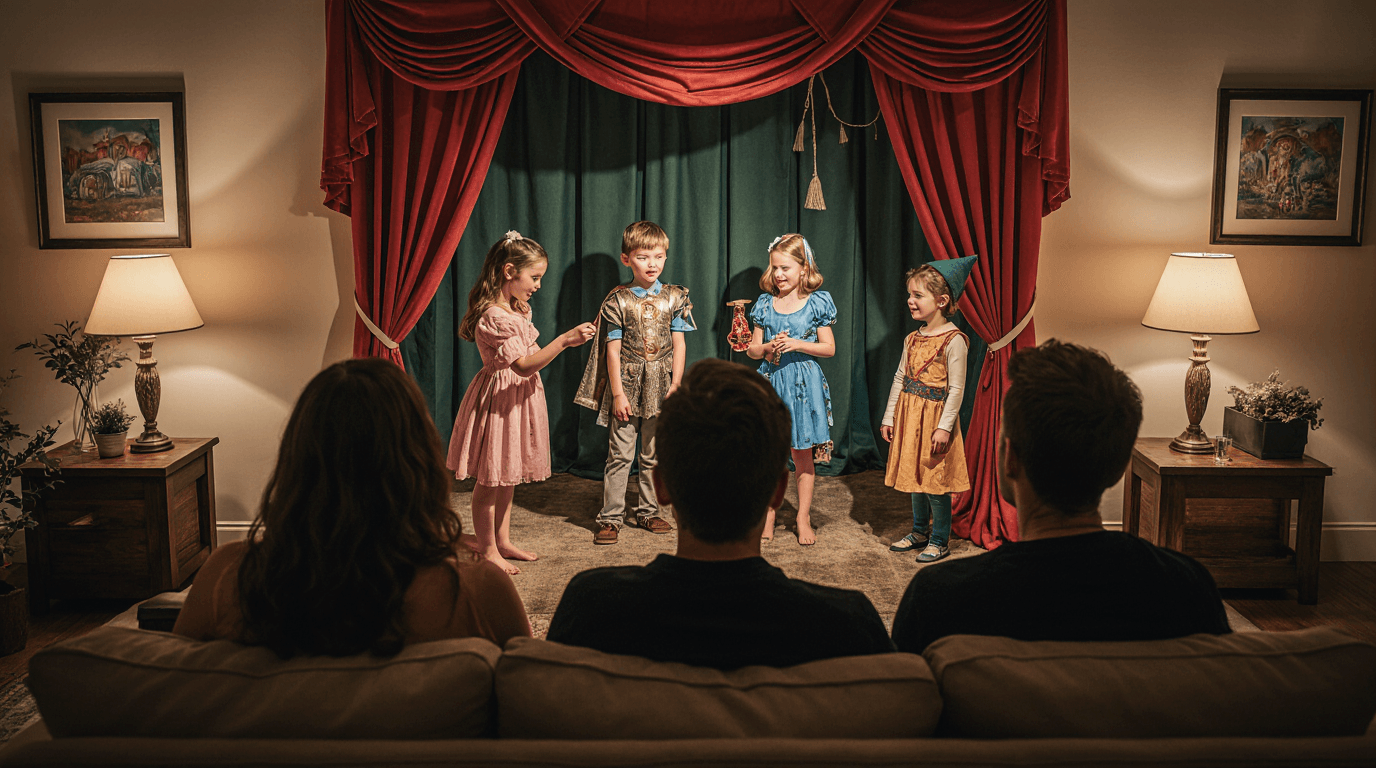
You can whip up awesome costumes for a home play using stuff you’ve probably got in your closet or junk drawer. I’ve been making costumes for my kids’ school skits and family play nights for years, and I’ve learned how to keep it cheap, safe, and fun without needing a sewing machine or art degree. This guide breaks down every step, with my go-to tricks to help you create costumes that make your play pop, whether it’s for kids, a family skit, or a school project.
How Do You Pick the Right Costumes for Your Play?
Start with the story. I always jot down who’s in the play and what makes each character stand out—like a king’s crown or a fairy’s wings. For a five-person play, I list each role and one key feature (e.g., pirate = eye patch). If it’s a familiar story like Cinderella, I pull up pictures online for inspiration. Simple stories with clear visuals, like The Three Little Pigs, are easiest for beginners.
My trick: Get kids to describe their characters or draw them. My son sketched a robot with foil arms for a school play, and it made the costume way more fun to build because he was so excited.
How Much Should You Spend on Costumes?
You don’t need to drop much cash. I’ve made costumes for under $5 each using stuff from home, while store-bought ones can run $20–$30 a pop. Here’s where the money usually goes:
- Fabric or old clothes (free from your closet).
- Accessories like buttons or ribbon ($1–$2 at craft stores).
- Tools like scissors or glue (probably already own them).
My hacks:
- Raid your wardrobe for scarves, sheets, or old T-shirts.
- Hit thrift stores—$2 dresses make great princess gowns.
- Skip buying new unless it’s a tiny thing like glitter ($1 a tube).
I once made a pirate, mermaid, and octopus costume for a school play using only closet finds and some cardboard. Total cost: $0. The kids looked awesome, and I felt like a hero.

How Do You Design a Costume Without Being Artsy?
You don’t need to be a designer to make costumes look good. I just scribble a basic sketch—stick figures are fine! Focus on the character’s shape, color, and one big detail that screams who they are, like a cape for a superhero or a hat for a chef.
My tips:
- Print coloring pages online for quick templates (try “animal costume patterns”).
- Pick colors that match the character’s vibe—red for bold, blue for calm.
- Add one standout piece, like a crown or a tail, to sell the look.
When my daughter wanted to be a fairy, we used a green skirt and glued on paper wings. She helped pick the colors, and it boosted her confidence on stage—psychologists say kids shine more when they help design their costumes.
What Materials and Tools Are Safe and Easy to Use?
Keep it simple and safe, especially with kids around. Here’s what I use:
- Fabric: Felt ($1/yard), fleece ($3/yard), old T-shirts, or bedsheets.
- Decorations: Ribbon (50 cents/yard), glitter, paper, or stickers ($1/pack).
- Tools: Scissors, fabric glue ($2), safety pins, hot glue gun (for adults only, $7).
Where to get them:
- Closet or thrift stores for clothes.
- Delivery boxes for cardboard.
- Craft stores for yarn or fabric paint ($2/bottle).
Eco-tip: Use old sheets or clothes to keep things green. I turned a torn bedsheet into a ghost costume that my nephew still uses for Halloween.
How Do You Build a Costume Step by Step?
Here’s my process, honed from many late-night glue sessions:
- Cut the main shape (like a shirt or cape) from fabric or an old garment.
- Add extras like tails, ears, or a hat using cardboard or felt.
- Attach details with fabric glue, safety pins, or thread.
- Let everything dry before trying it on.
Beginner idea: Make a wizard costume with a dark bedsheet for a robe, a paper cone hat, and silver star stickers. Takes 30 minutes, costs $2 if you buy stickers.
Tools I love:
- Canva for free design templates.
- Printable stencils online (search “DIY costume wings” or “crown patterns”).
I made a lion costume for my son using a yellow T-shirt and yarn for a mane. It was a hit, and he roared through the whole play.

How Do You Make Sure Costumes Are Safe and Comfy?
Test the costume before the big day. Have the kid wear it and move around—run, jump, sit—to make sure it works. I learned this the hard way when a cape I made got tangled during a school skit.
Safety checklist:
- No sharp edges or tight straps.
- Fabric shouldn’t cover eyes or mouth.
- Check that nothing falls off mid-scene.
My tip: Do a full rehearsal in costume a day before. Kids love showing off, and you’ll spot any issues. My daughter’s fairy wings fell off once because I used weak glue—now I always double-check.
How Do You Add Decorations Without Going Overboard?
Decorations make costumes pop, but too much weighs them down or looks messy. Here’s what I do:
- Draw patterns with fabric markers ($2 at craft stores).
- Glue on foam shapes or stars (50 cents/pack).
- Add a small cape, belt, or badge for flair.
I turned a plain T-shirt into a knight’s tunic with a red fabric marker cross and a $1 belt. It looked awesome without being heavy.
Keep it light: Don’t pile on glue or big decorations—they can rip the fabric. I once overdid glitter on a mermaid tail, and it shed everywhere during the play.
How Do You Store Costumes for Later?
If you want to reuse costumes:
- Stash them in plastic bins or garbage bags to keep dust off.
- Label each one with the character name (e.g., “Wizard Robe”).
- Keep small bits like buttons or crowns in zip-lock bags.
Reuse ideas:
- Halloween outfits.
- Dress-up box for kids.
- Future school plays or parties.
I’ve got a bin in my garage with costumes from three plays—my kids still pull them out for pretend play.
What Mistakes Should You Avoid?
I’ve screwed up plenty, so here’s what to watch for:
- Picking tricky characters: A dragon with 50 scales is a nightmare. Stick to simple roles like animals or fairy-tale folks.
- Skipping the test run: I once made a hat that fell off mid-scene. Always test costumes in action.
- Overloading decor: Too much glue or heavy stuff makes costumes clunky. Focus on one or two cool details.
When I started, I tried making a super-fancy queen costume with tons of beads. It took forever and looked messy. Now I keep it simple, and the results are way better.